Curriculum & learning outcomes
A surf day your unit plan can point to
Every program is mapped to Health and Physical Education, the four dimensions of hauora, and Water Skills for Life, with stated learning outcomes per session. This is evidenced EOTC, not just a fun day out (though it is that too).
By year level
Curriculum links at a glance
The New Zealand Curriculum expects all students to have the chance to learn basic aquatic skills by the end of Year 6. Here is where our programs plug in.
| Year level | HPE focus | Hauora dimensions | Water Skills for Life |
|---|---|---|---|
| Years 1 to 4 | Personal health and physical development; movement concepts in a beach environment | Taha tinana (physical), taha whanau (belonging in the group) | Getting in and out safely, submersion and personal buoyancy, safe behaviours at the beach |
| Years 5 to 8 | Movement skills, challenge and risk management; relationships with other people | Taha tinana, taha hinengaro (confidence and managing challenge) | Orientation in the water, propulsion, identifying rips and hazards, safety of self and others |
| Years 9 to 10 | Challenge and outdoor education; hauora as a concept; interpersonal skills in real risk contexts | All four dimensions, applied and reflected on | Surf-zone competence, rescue awareness, group safety decision-making |
| Senior (Years 11 to 13) | Leadership, achievement and confidence through performance and safety learning | Self-management, leadership, care for the coast | Advanced water competency and leadership in the surf zone |
Stated outcomes
What students can do by the end of a session
Each session states its learning outcomes up front, so your planning and reporting write themselves. A typical full-day program means every student can:
- Identify a rip, a bank and a safe swim zone from the beach
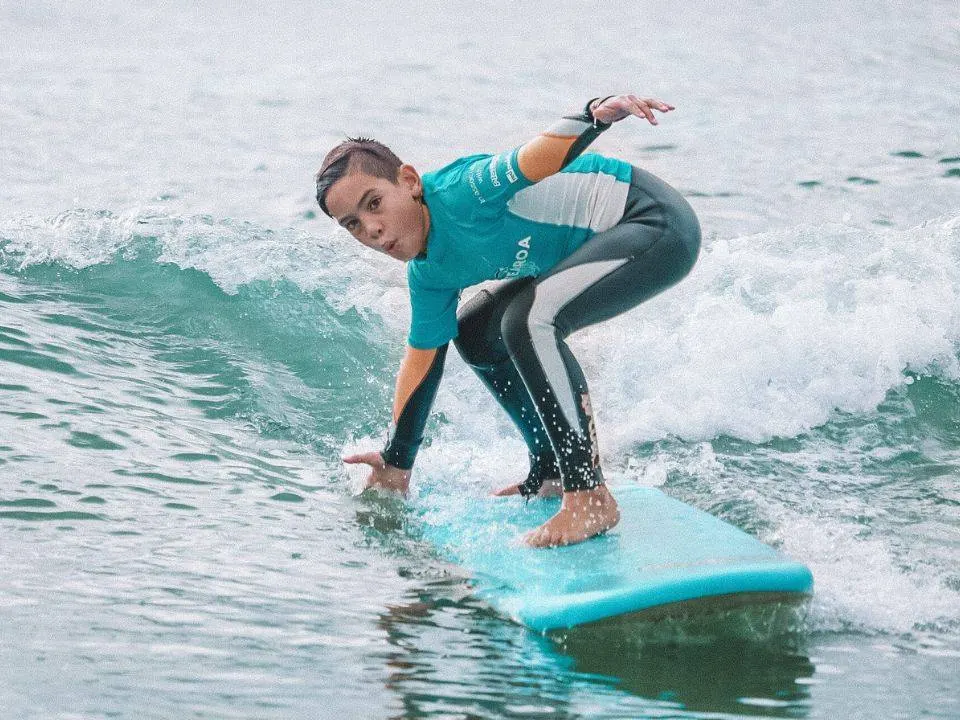
- Demonstrate safe entries, exits and board control in whitewater
- Paddle, pop up and ride whitewater to the beach (most students stand on day one)
- Explain the surf lifesaving signals and what to do if they are in trouble
- Describe how the ocean challenged them and how they responded (hauora reflection)
Why the beach
Learning a classroom cannot replicate
The surf zone is a genuine challenge environment: real risk, managed expertly, where students practise courage, judgement and looking out for each other. Teachers tell us the students who grow most are rarely the sporty ones. Water competency learned in real waves stays learned, and the confidence transfers back to the classroom.
What schools say
Reviews on the learning that sticks
Our tamariki learned surfing techniques, water safety, and environmental awareness.Angela Bell, Deputy Principal Warkworth School
Students are now confident in the water, lots of families are going out to buy surfboards and get into the sport.Alexia Jacobs, Teacher Te Kura Taumata o Panguru
Us as teachers were amazed at how fast they picked up on the skills that were taught and how much fun they had while learning how to surf.Liz Elia, Senior Teacher Finlayson Park School, Manurewa
Get the curriculum map for your year level
Tell us your class and focus, and we will send the matching outcomes table and a sample itinerary.