
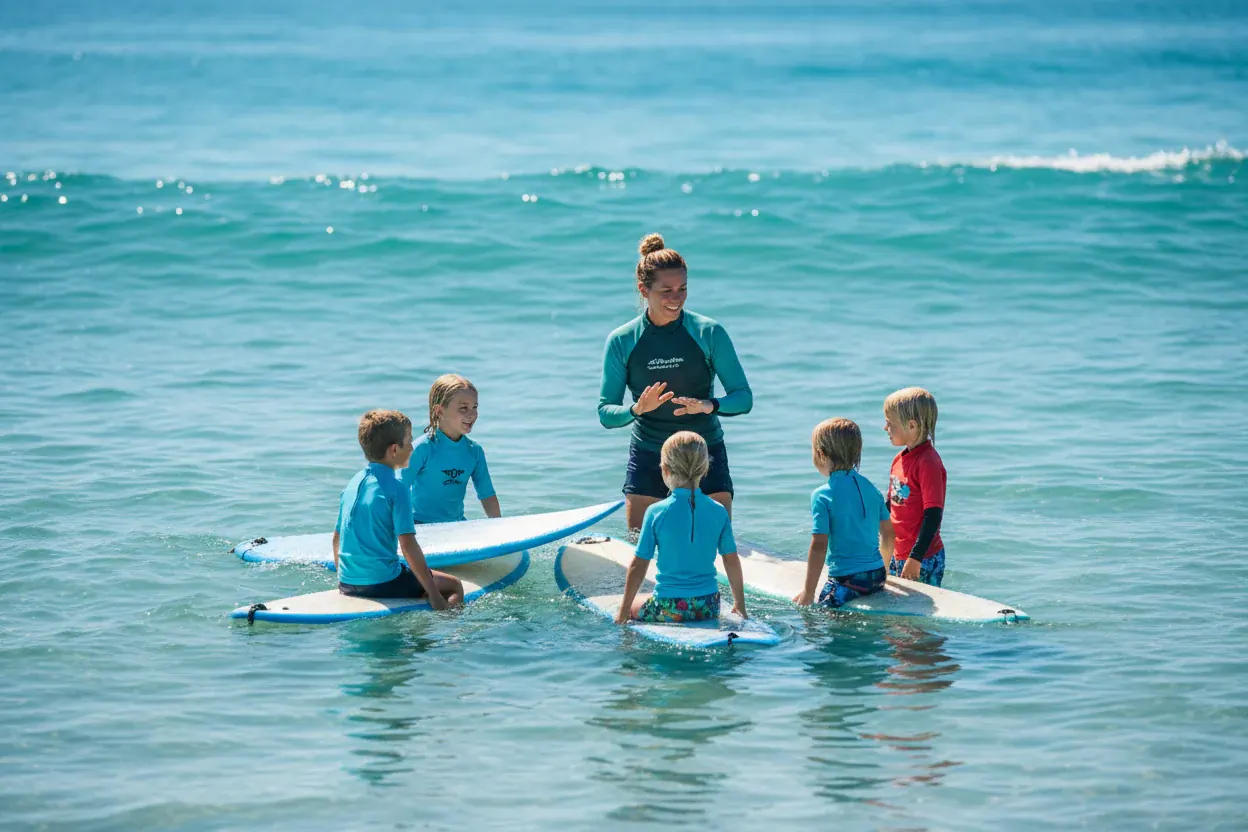
Years 1 to 6
Primary school surf & beach days
First waves, big grins, and real Water Skills for Life learning. Built for juniors: standing-depth water, tightened ratios, and a rotation of beach games, safety skills and whitewater rides.
What it is
A beach day with learning at its core
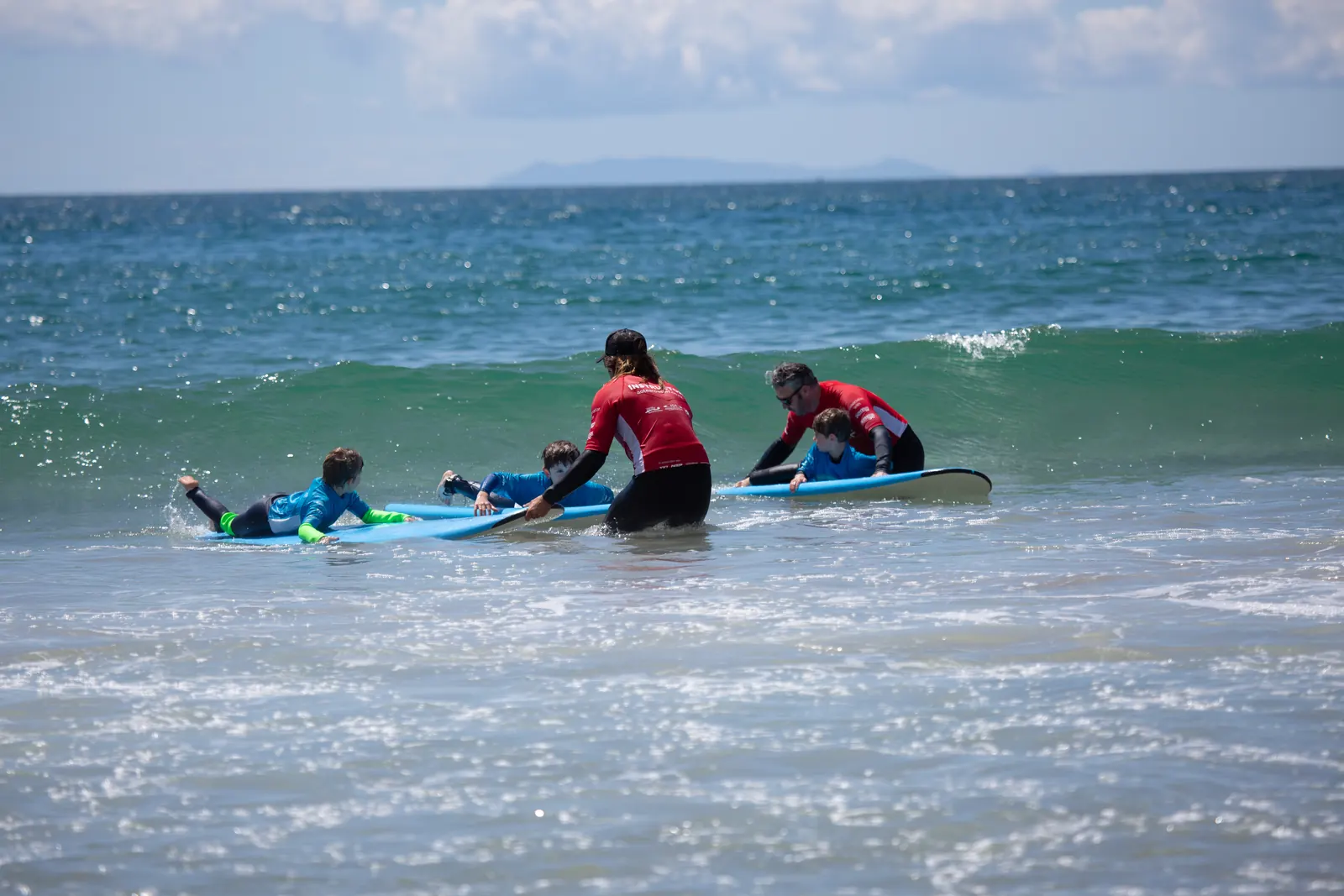
Primary sessions rotate small groups through three stations: beach safety and hazard spotting, ocean confidence games in the shallows, and first whitewater rides on soft boards. Every student is in the water only as deep as their confidence, and every activity maps to a Water Skills for Life skill set.
- Half day or full day
- Standing-depth water only
- 1:4-6 ratio depending on age, tightest for juniors
- From $22 per student
Learning outcomes: by the end of the day students can identify beach hazards and the safe swim zone, float and recover confidently, control a board in whitewater, and explain what to do if they need help.
Hour by hour
Sample full-day itinerary
- Arrive and welcome
Welcome and gear fit-out (wetsuits and rash shirts for everyone), group allocation with your class list.
- Beach safety session
Hazard spotting from the dunes: rips, banks, flags and signals. Students map the beach like a lifeguard.
- Ocean confidence station
Shallow-water games: floating, wading, wave hopping and buddy checks, building comfort before boards come out.
- First surf session
Pop-up practice on the sand then whitewater rides in standing-depth water. Instructors in the water at junior ratios.
- Lunch
Sheltered picnic area. Teachers relax; we reset boards.
- Second surf session
Rotations continue so every student gets maximum wave count. Confident groups progress; cautious ones consolidate.
- Wrap-up and farewell
Gear returned, highlights shared, group photo with the boards up. Buses away by 2:00 pm.
The day runs as rotations, designed around your student numbers: half days suit 4 to 60 students, and full days run 2 or 3 rotations for 30 to 100 students, all inside a normal school day.
Half-day version: one confidence station and one surf session, same outcomes at a gentler pace.
Junior questions
What primary teachers ask
Can Year 1 and 2 students really do a surf day?
Yes, as a beach and whitewater day. Juniors work in standing-depth water with tightened instructor ratios, high-buoyancy soft boards and a beach-based rotation so no one is in the water beyond their confidence.
What if some of my students cannot swim?
Non-swimmers are planned for, not excluded. They stay in shallow standing-depth water at a tighter ratio, and building water confidence is one of the stated learning outcomes of the day.
How many parent helpers do we need?
Our instructors provide full operational oversight and lead all water-based activities. Some supervisors from the school are asked to assist in the water, mainly at the shoreline and on each side of the surfing group. Teachers and supervisors stay responsible for pastoral care on the beach at your school's normal EOTC ratio. We confirm the supervision structure in your RAMS.
How long are junior students actually in the water?
In bursts, not marathons. Juniors rotate between the water, beach games and a rest for lunch and sports games. Rotations generally run 75 to 90 minutes depending on overall student numbers for the day.
How do you handle sun and cold?
Every student wears a long-arm, long-leg wetsuit and we provide sunscreen, applied and re-applied through the day. We plan shade and warm-up breaks into the rotation. Cold, tired kids don't learn, so comfort is part of the program design.
Can students with additional needs take part?
Yes, talk to us when you book. Extra instructor support, or in some instances a dedicated supervisor from your school, may be needed. Adapted equipment and beach-based roles are all normal for us, and we plan it properly in your proposal and RAMS rather than improvising on the day.
Should we book a half day or a full day?
A rough guide: half days suit 4 to 60 students, and full days handle 30 to 100 by running 2 or 3 rotations inside the school day. Either way we design the day around your school, so get in touch with your approximate year levels and student numbers and we will recommend the right format in your Proposal Document.
What primary teachers say
Reviews from primary schools
The instructors were so great at teaching the students the basics in such a short space of time, that the students picked it up so quickly in the water! We had so many students who had never surfed before surfing that day. It was incredible to see!Jess Lee, Teacher Oratia School
Our children absolutely loved the day. They showed resilience and bravery and surprised themselves with what they achieved. Every child was bursting to tell their families about what they had done.Maree Flashman, Year 5/6 Learning Leader St Mary's Catholic School Ellerslie
The team at Aotearoa Surf were awesome with our students, making sure that everyone participated.Chris King, Principal Tomarata School
Book a junior beach day your syndicate will rave about
Dates fill fastest in Terms 1 and 4. Tell us your numbers and we will hold a date while you confirm.